
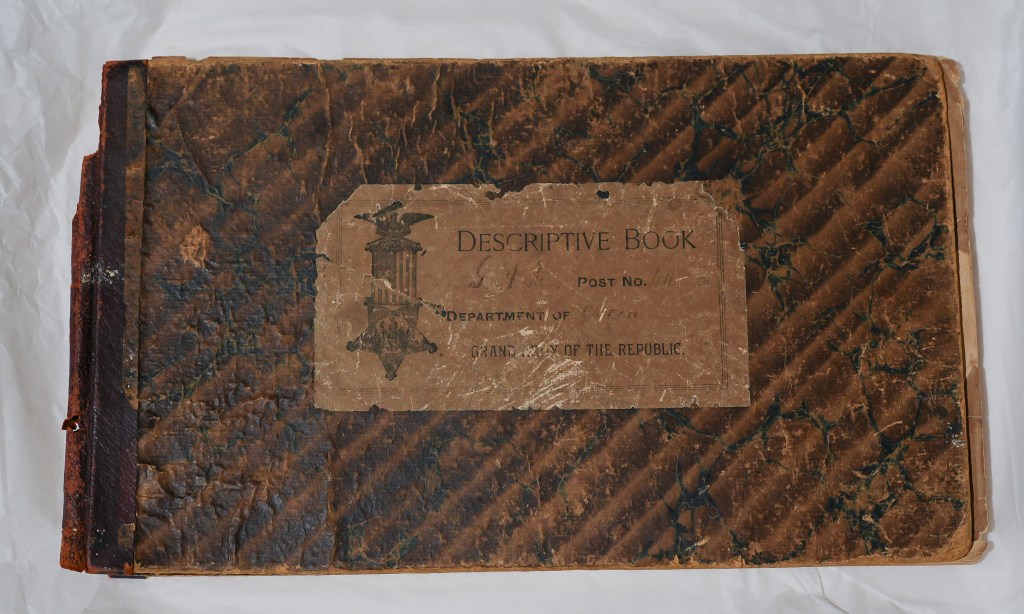
The Ledger of Lost Stories
August 22, 2026
I’m sometimes asked what my favorite artifact is in the Heritage Museum. Asking a museum director to pick one favorite out of nearly 25,000 cataloged objects is a little like asking a librarian to choose a favorite book.
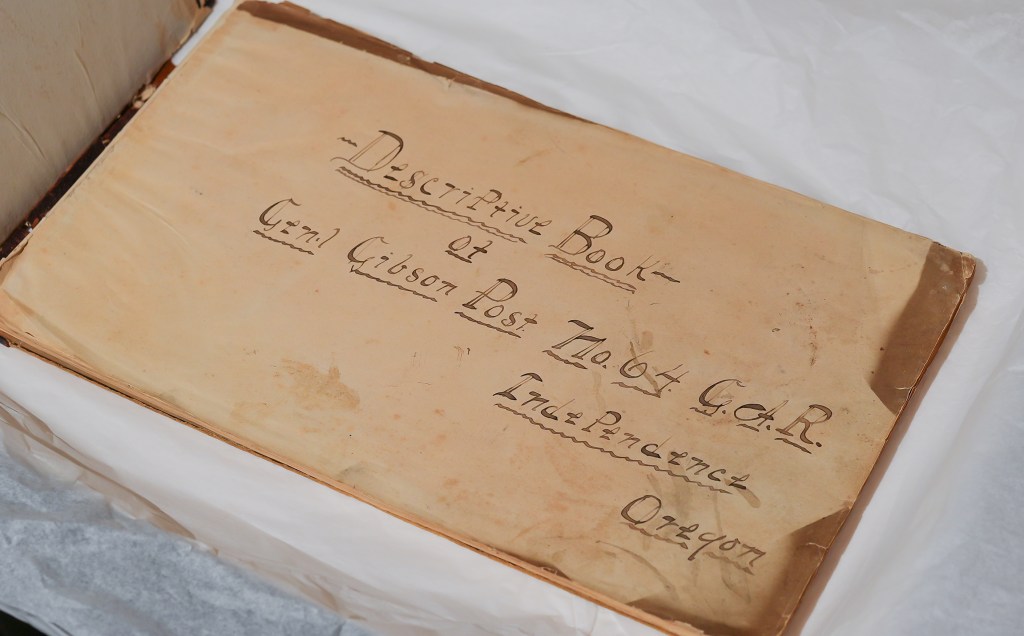
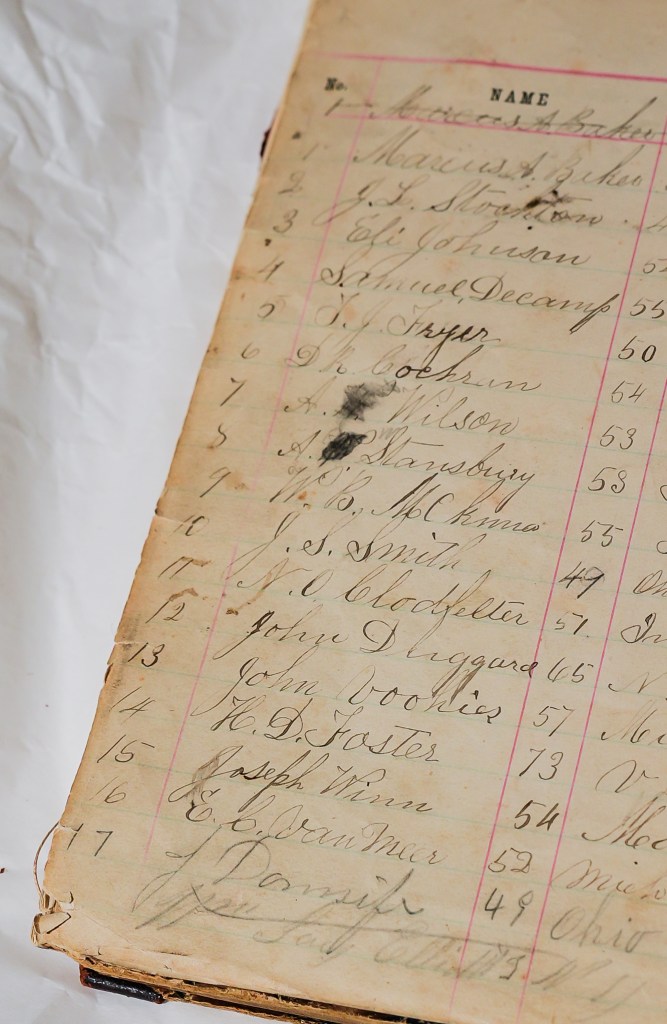
If I did have to choose just one, there is a unique item in the collection that speaks to a generation of veterans all but unknown to us today in Polk County. A thread that leads to their stories can be found in a well-worn membership ledger that dates back over a hundred years.
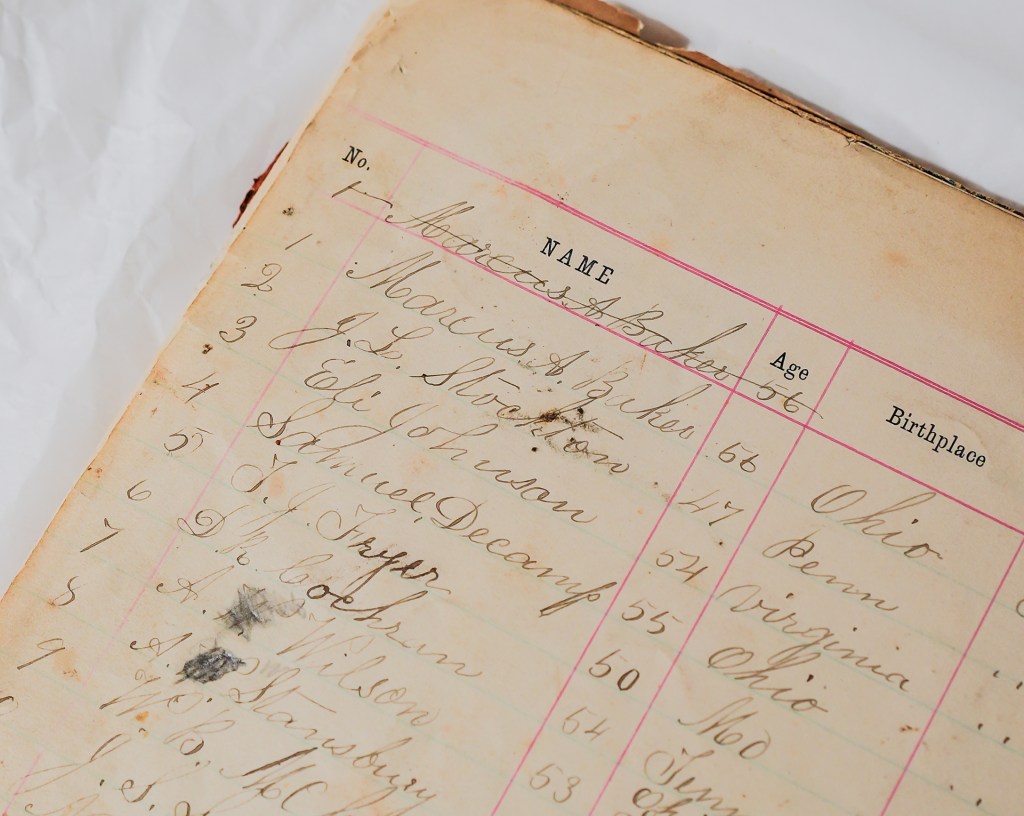
It doesn’t look remarkable. It isn’t covered in gold leaf or displayed under dramatic lighting. It’s a record book created by the veterans who joined the General Gibson Post No. 64 of the Grand Army of the Republic right here in Independence. Its pages are filled with names, regiments and dates of service all carefully hand written in fading ink.
The Grand Army of the Republic, commonly called the G.A.R., was a fraternal organization made up of Civil War Union Army veterans. The organization was founded in 1866 and spread across the North and West as the Soldiers returned to their civilian lives and started over. Their local posts became places of friendship, service, remembrance, political advocacy and community leadership.
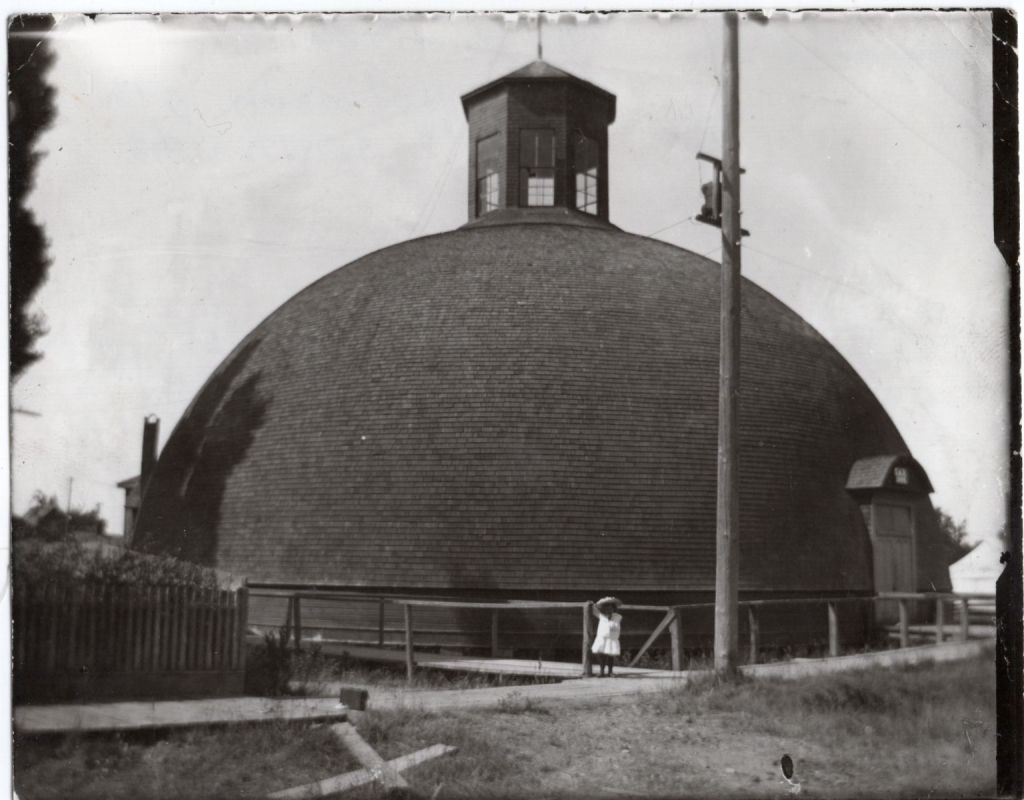
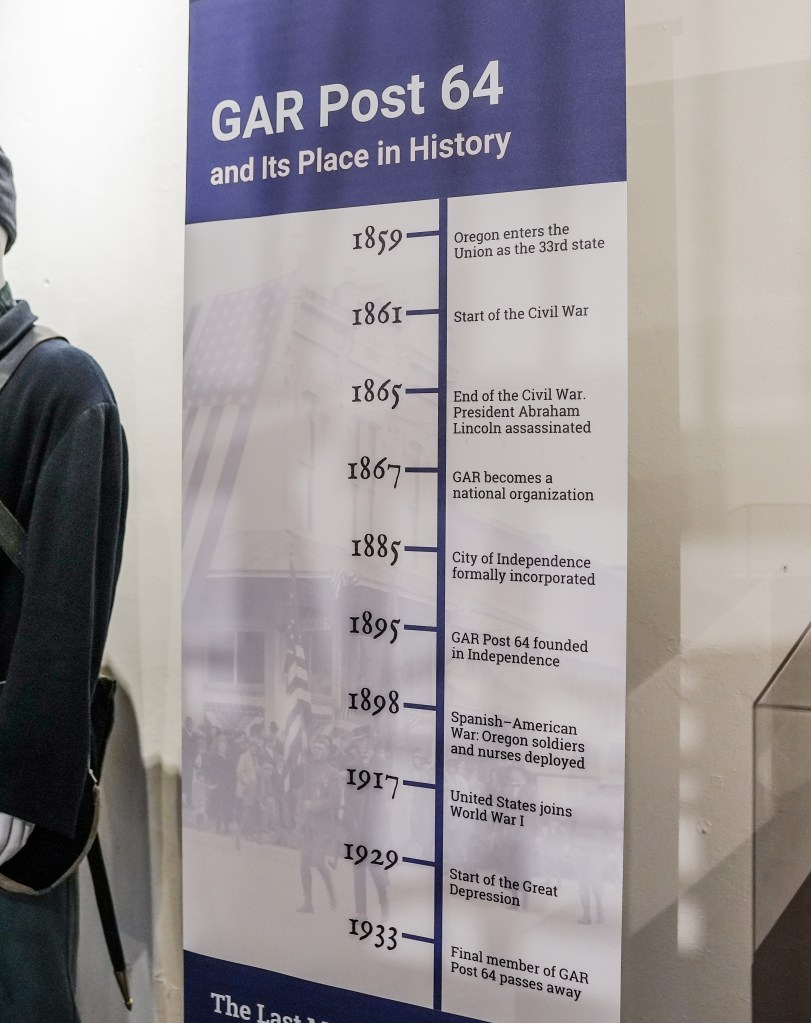
General Gibson Post No. 64 was established in Independence on January 11, 1895, with nineteen founding members. By 1923, the post had grown to 113 members. These veterans served largely in the Western Theater during the war. Many fought at the Battle of Vicksburg. Others took part in the brutal guerrilla fighting in Missouri, Kentucky and Tennessee.
One member of the post, Cornelius Burright, served alongside two of his brothers as a musician in the 14th Iowa Volunteer Infantry Regiment. At the pivotal battle of Shilo in April 1862, the 14th Iowa held one of the most important positions on the battlefield, a sunken road known as the “Hornet’s Nest.” There, the regiment withstood repeated Confederate attacks until it finally ran out of ammunition. Cornelius escaped the final onslaught, but his brother Joseph was captured and sent to the infamous P.O.W. camp at Andersonville, Georgia. Cornelius, all of 19 at the time, survived three years of combat and later migrated to Oregon. He is buried at our Hilltop Cemetery just south of town.
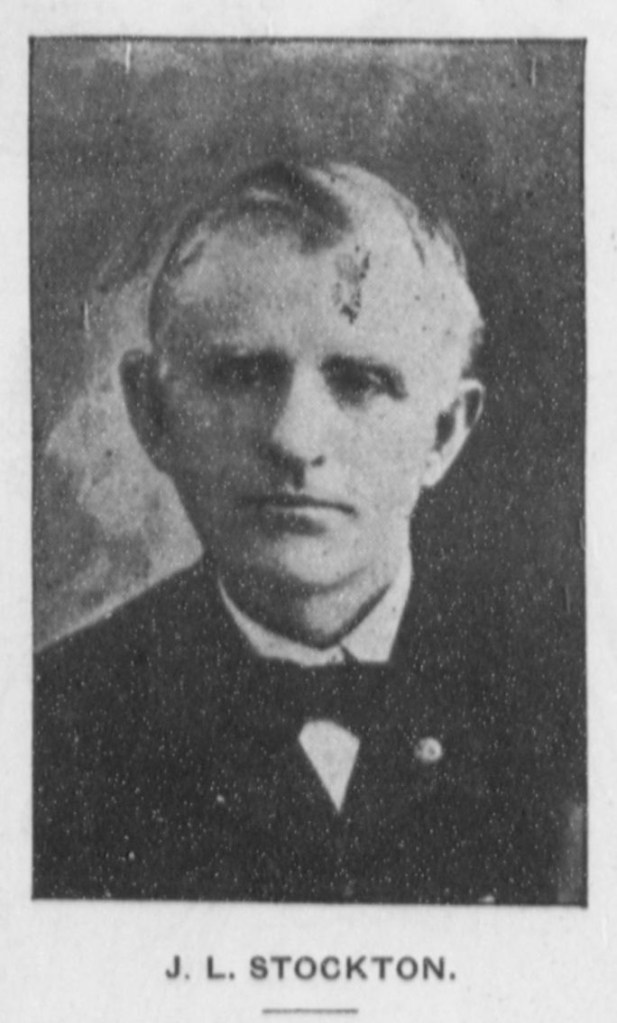
Each name in the ledger is a gateway to similar stories. As I turn the pages, I find names that echo throughout our community’s history. Dr. T. J. Lee and Marshall Scrafford both served in the Oregon Legislature. J. L. Stockton became mayor of Independence. Others were farmers, merchants, craftsmen, business owners, and neighbors whose names never appear in state history books but they each helped shape our town.
This ledger has had a life long after the last member signed its pages. Over the years, I’ve carried it out for local authors, researchers, and members of the Sons of Union Veterans of the Civil War who were searching for a piece of a story. Every time I put on a pair of white cotton gloves, carry the ledger out of the archive, and place it on a table, I’m holding something that outlived every person who wrote in it. I can’t help but feel the importance of that history in my hands and the responsibility that comes with caring for it until the next generation is ready to take responsibility for it.
I also find myself wondering about the meetings themselves. I imagine these veterans gathering together in Independence decades after the Civil War had ended. They must have laughed together, argued together, and shared stories that only they could fully understand. History has a way of making people seem larger than life, but this ledger reminds me that they were also simply neighbors.
The last surviving member of General Gibson Post No. 64 was John Whitcomb Kelley. He was born in Missouri and served with Company I of the First Nebraska Cavalry during the Civil War. He married Mary Davenport in 1869, and the couple moved to Independence in 1911. When Kelley died on March 19, 1933, the post came to an end.
Today, John Whitcomb Kelley and several of his fellow members of Post 64 rest in Hilltop Cemetery, along with Cornelius Burright. Their meetings are long over, but somehow the conversation continues. Every time someone opens this ledger, another person learns their names. Another researcher finds a clue. Perhaps another descendant discovers a connection. Another visitor realizes that the history of Independence isn’t just about buildings or dates. It is about the people who helped forge a nation, one small community at a time.
Every time I lift the ledger from its treasured spot in the archive, I feel the weight of the lives of these men within the pages. Museums are not really about collecting old things. They’re about preserving the clues that breathe life into those who came before us. The ledger will be here, always ready to divulge its secrets to those in search of our town’s connection to America’s most traumatic and bloody war.
Ensuring the ledger survives for future generations is a responsibility I never take lightly.
Amy Christensen is the Curator & Director of the Heritage Museum here in Independence.

 The Indy Herald & Globe
Leave a comment