
By: Jack Cook
By Jack Cook
Back in the 1990s, my friend “Doc” Curry, a Salem dermatologist, would often ask if I wanted to go fly with him. Doc owned a beautiful Stearman biplane, the same kind of aircraft tens of thousands of young Americans learned to fly during their military training in World War II.
We’d take off from Salem and point the old biplane’s nose toward Independence. Not far from Fitts’ farm and airstrip lay a little farm owned by a man who had been one of those tens of thousands who learned to fly on Stearmans during the war. We’d buzz over his house, and if he was outside, he’d wave up at us while Doc waggled the Stearman’s wings in reply.
Over the years, I visited that farm several times to sit and chat with the impressive man who waved up at us. Dave Fry was a man who possessed clear eyes, an easy smile and a warm handshake. Living in retirement for decades on that farm just south of Independence, he was one of those men everyone instinctively liked. Yet, his gentle demeanor concealed the hardships he’d experienced in his early adulthood.
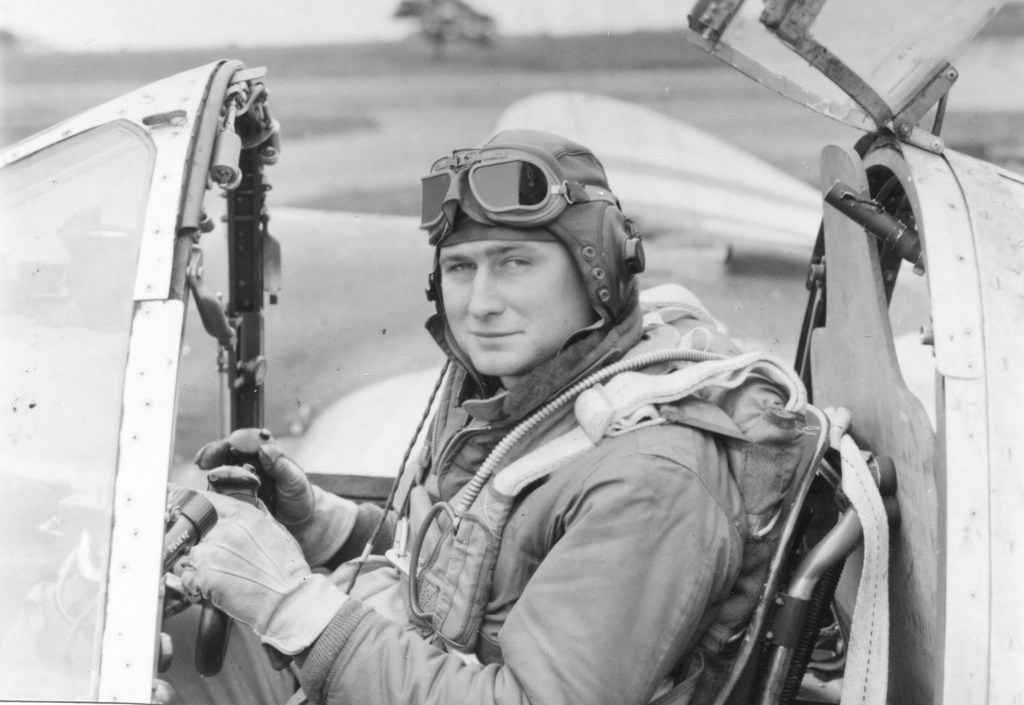
Dave was born in Taft, CA in 1922, graduating from high school in 1940 before attending a local junior college. After the Japanese attacked Pearl Harbor the following year, he left his
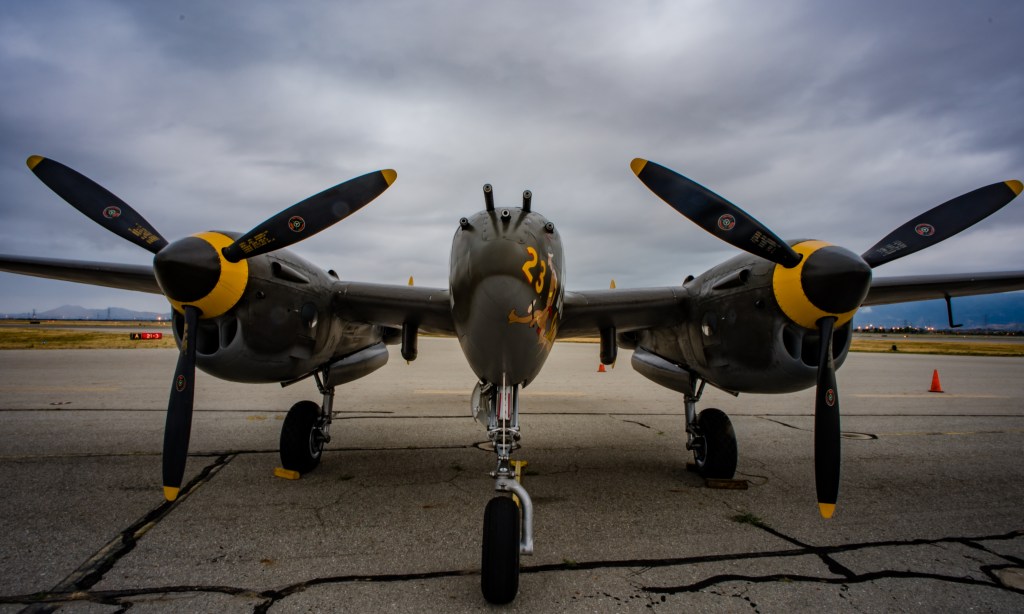
studies behind to join the Army Air Forces, where he learned to fly the long-range, twin engined fighter known as the P-38 Lightning.
He deployed to England in 1944, serving with the 55th Fighter Group which provided escort for American bombers attacking the Third Reich in daylight raids that sometimes numbered over a thousand aircraft.
On September 10, 1944, Dave’s squadron struck an airfield near Augsburg, Germany. Diving down on it, the Americans discovered about twenty planes partially camouflaged hidden around the runway. Despite intense anti-aircraft fire, Dave destroyed one plane in a single low-altitude pass. It was his first confirmed victory of the war. Three days later, now flying the legendary P-51 Mustang, Dave’s luck ran out.
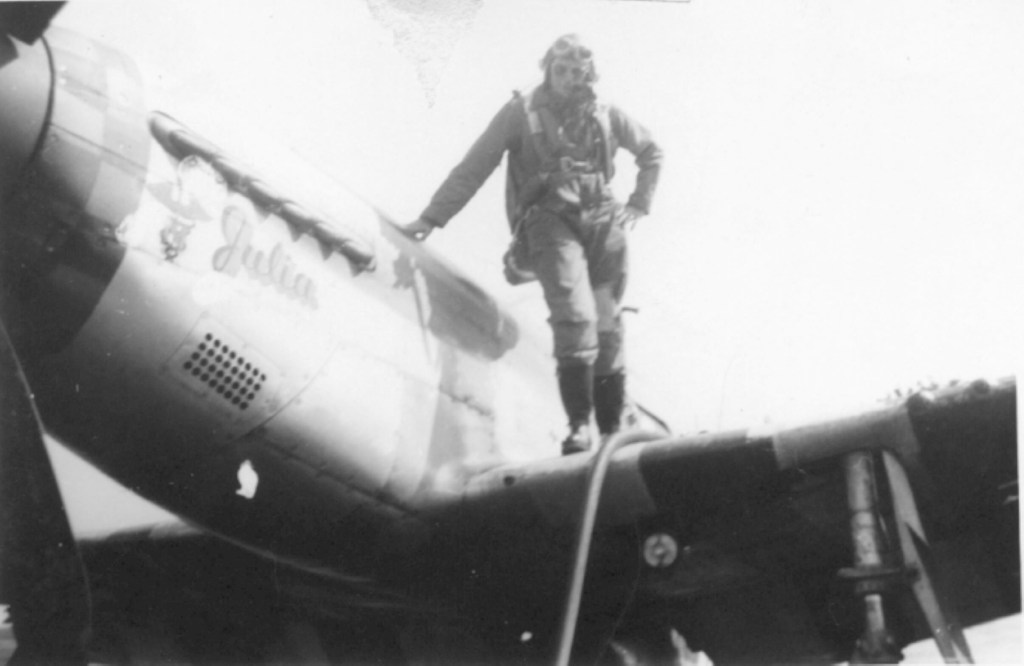
While returning to England after escorting American bombers to a target near Merseberg, Germany, Dave’s flight of four ran into three Luftwaffe fighters. As Dave rolled into a dive after one, his engine suddenly quit. He tried furiously to restart it, dropping from 24,000
feet to under 8,000 before he finally gave up and bailed out.
As he fell to earth, it took two hard tugs on his parachute’s D-ring handle to get it to deploy. As he later recalled, “For the next few minutes, my life was peaceful…while floating down over the village of Ostheim.”
Dave landed in a potato field where he was captured by a German soldier armed with a rifle. After a night in jail, the Germans loaded him into the back of a truck with three other downed American aviators and several guards. As the vehicle drove them to a
prisoner of war camp, the four men sat together and discussed how they might overpower their guards.
One of the German soldiers sitting in back with them suddenly joined the conversation. In perfect English, he said, “I wouldn’t try that, if I were you.”
Dave Fry spent the rest of the war in Stalag Luft I prisoner of war camp, where he worked in the kitchen with a friend from flight school who’d been shot down while flying one of the bombers Dave’s unit used to escort. Said Dave later, “That winter we made ice cream for everyone using snow, powered red cross milk and our salt ration. It sure was good, but the German’s didn’t give us anymore salt for three months, and the bad food got worse without it.”
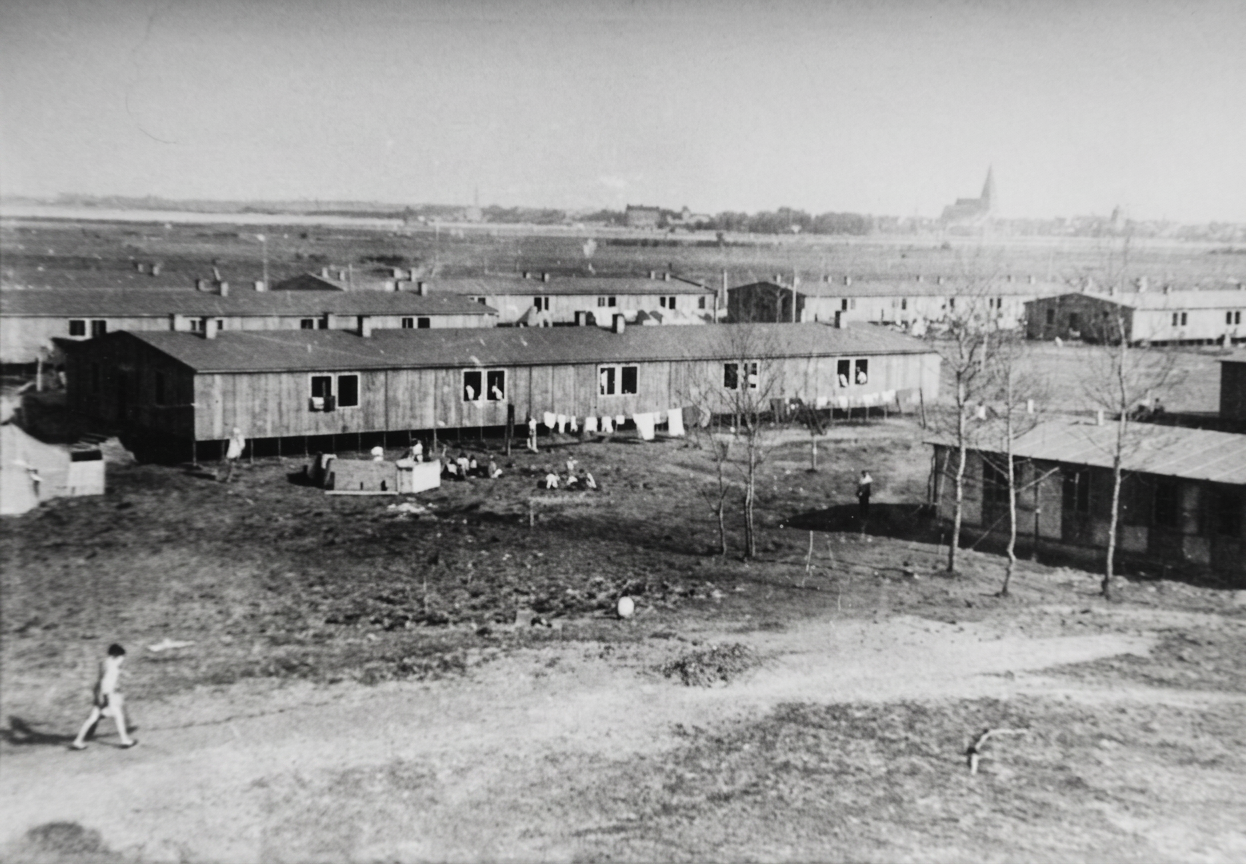
On May 1, 1945, advancing Russian troops liberated Stalag Luft I after the German guards fled the area. Dave returned to the US soon afterwards and decided to make a career in the Air Force. He spent thirty-four years in uniform, earning 7 Air Medals for his actions in
WWII, as well as a Distinguished Flying Cross for a classified mission he flew over North Vietnam two decades later.
He retired from the USAF as a lieutenant colonel at Aviano, Italy in 1977 after having fought in two wars. He and Bennie, his wife, returned to the States and bought a small farm outside of Independence on Buena Vista Rd, just west of the Willamette River, where they lived for the rest of their lives.
I met Dave in the mid-1990s through a mutual friend
who by chance had flown with Dave in the 55 th FG in England. Talking with Dave it became very clear that he loved his family, his farm, his community and his country. When I asked him if he was ever scared, he replied, “Of course, but nothing I went through
compared to what my parents endured.”
Dave’s younger brother Richard, a 19 year old Marine rifleman was killed in action during the invasion of Guam on June 23, 1944. The War Department telegram announcing Richard’s death did not reach the family until September, 1944. A week after it arrived, a Western Union deliveryman brought a second War Department telegram to the Fry house in California, this one explaining that their other son in uniform, Dave, was missing in action over Germany.
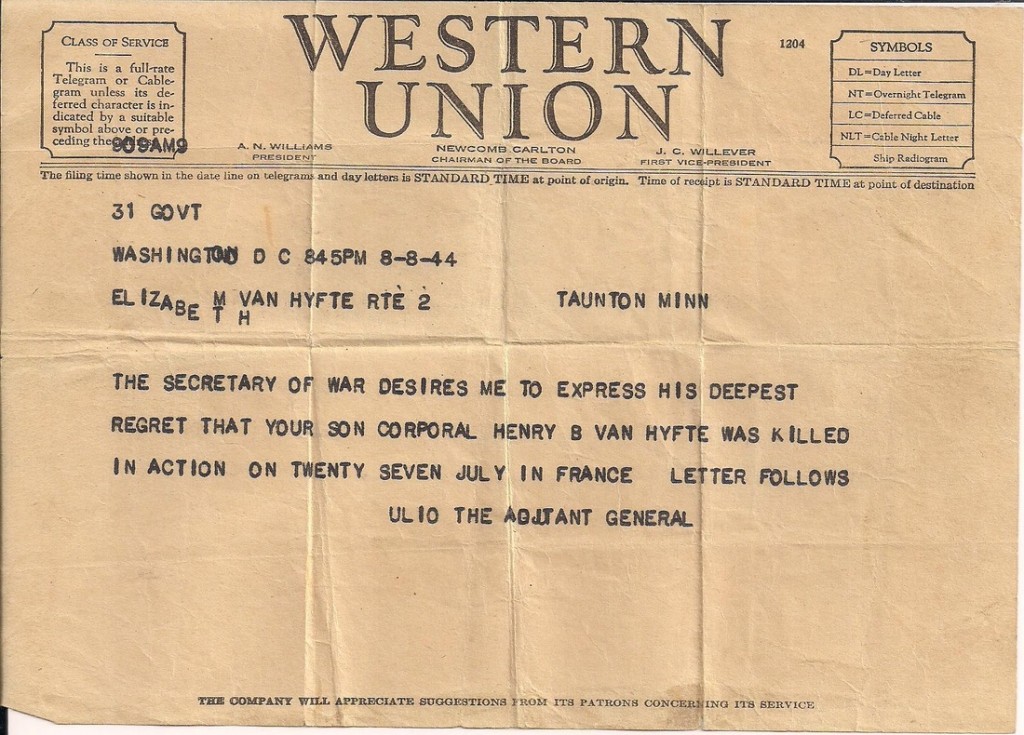
Though I never knew when his parents found out he was still alive, it is likely the news came very close to the end of the war in Europe months later in May 1945. The Red Cross mail pipeline started to break down as Germany collapsed and the Russian Army drove into the heart of the Third Reich, while the Western Allies did the same after crossing the Rhine River in March 1945. The uncertainty mixed with the grief over Richard’s death must have been a devastating combination for Dave’s parents, one that all too many of our Gold Star families have experienced over the past century.
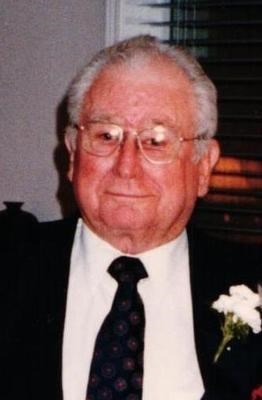
Dave remained a fixture in the Independence community until his death on January 27, 2016. He served as Worshipful Master of the Mason’s Lyon Lodge in Independence and was also a member of the local American Legion, VFW and X-POWs. He was laid to rest with honors in Willamette National Cemetery.
 The Indy Herald & Globe
Leave a comment